

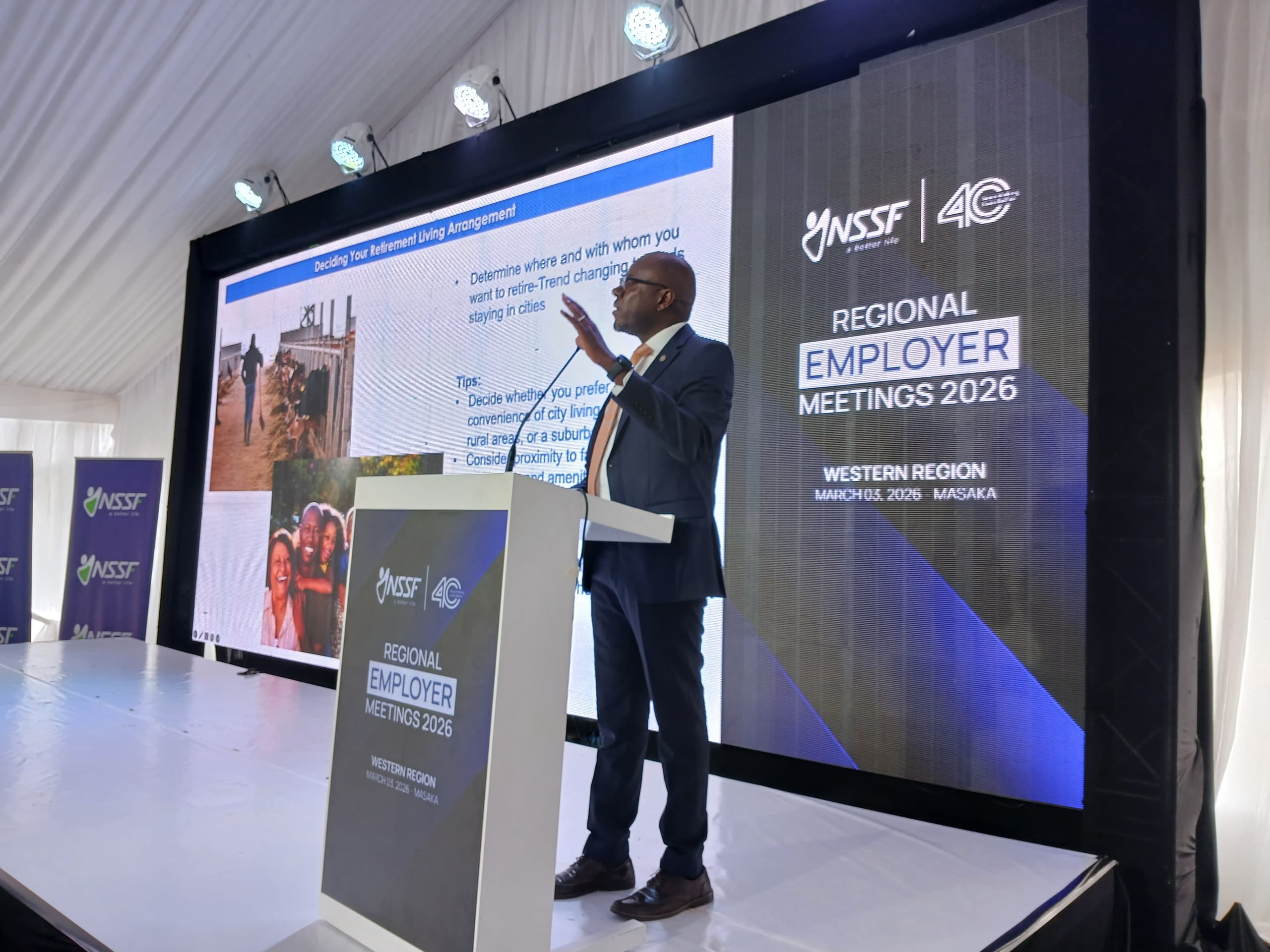
The National Social Security Fund Uganda (NSSF) has given non-compliant employers a two-month deadline to remit outstanding workers’ contributions or face legal action.
The warning was issued during an employers’ engagement meeting held in Masaka City, which brought together company owners and institutional heads from the greater Masaka, Ankole and Kigezi regions.
NSSF officials raised concern over what they described as a growing trend of employers deducting money from employees’ salaries but failing to remit it to the Fund — a practice they said threatens workers’ long-term financial security.
Geoffrey Sajjabi Waiswa, an NSSF Commercial Officer, said it is a statutory obligation for every employer to register all eligible employees and promptly submit their monthly contributions.
“Employers have a legal duty to ensure that all qualifying employees are registered and that their contributions are submitted without excuse. Failure to do so attracts penalties under the law,” Waiswa said.
Under the NSSF Act, employers are required to remit 15 percent of an employee’s wages — with 10 percent contributed by the employer and five percent deducted from the employee’s salary. Non-compliance attracts interest penalties, fines and possible prosecution.
Officials clarified that interns and employees under probation are also entitled to NSSF contributions, stressing that employment status does not exempt employers from compliance.
The Managing Director of NSSF, Patrick Ayota, said the Fund also caters to self-employed individuals through voluntary savings arrangements.
“You just need Shs5,000 to register and open an account with NSSF and start saving for your future,” Ayota said.
He encouraged Ugandans in the informal sector — including traders, boda boda riders, farmers and small-scale entrepreneurs — to embrace voluntary savings to secure their retirement.
“NSSF is not only for those in formal employment. Every Ugandan earning an income can deliberately save for the future,” Ayota emphasized.
Some stakeholders at the meeting appealed to the Fund to reconsider the eligibility age for accessing savings, proposing that it be reduced from 55 to 45 years.
NSSF officials responded that any revision of the access age would require broader stakeholder consultations and amendments to the law governing the Fund.
The Fund reiterated that employers with outstanding remittances have been granted a strict two-month window to clear their arrears or face enforcement action.
It added that compliance inspections and audits will be intensified across the regions to safeguard workers’ savings.
The Masaka engagement is part of NSSF’s nationwide compliance campaign aimed at strengthening enforcement, enhancing transparency and protecting employees’ retirement benefits.
